


How to Automate Lead Capture for Service Businesses and Turn More Inquiries Into Booked Jobs


.svg)
If you are still writing down leads on paper, manually copying Facebook messages into a spreadsheet, or forwarding web form emails to your office staff, you are leaking revenue.
Modern service business lead generation is no longer just about getting the phone to ring. It is about what happens in the first five minutes after someone reaches out.
The businesses that respond first win more jobs. The businesses that organize leads automatically convert more consistently. And the businesses that automate lead capture build predictable, long-term growth.
Most service businesses do not have a marketing problem. They have a systems problem.
This guide explains what automated lead capture actually means today, why manual systems fail as you scale, how CRM lead capture should work in 2026, how ServiceMonster automates lead capture across channels, and how automation increases close rates, marketing ROI, and lifetime customer value.
If you want a system that captures every opportunity and follows up automatically, this is where to start.

What Is Automated Lead Capture?
Automated lead capture is the process of collecting customer information from multiple sources and sending that data directly into your CRM without manual entry.
Instead of:
- Writing names on job tickets
- Copying and pasting emails
- Manually creating customer records
- Forwarding Facebook inquiries
With automation in place:
- Contact details are recorded instantly
- Leads are organized correctly
- Your team is notified immediately
- Follow-up can begin without delay
This is lead capture automation.
For service businesses, it means every inquiry becomes a structured opportunity inside your CRM instead of an email that might get buried.
Why Manual Lead Capture Breaks as You Grow
Manual systems feel manageable when you are small.
You remember who called. You track open estimates in your head. You scroll through texts to find contact information.
But growth exposes weaknesses quickly.
Operational Breakdowns
As volume increases, common issues appear:
Leads sit in email inboxes for hours. Office staff manually re-enter webform data into the CRM. Typos and incomplete records occur. Facebook leads stay inside Meta Business Suite. No one tracks source attribution consistently.
You end up with fragmented data and inconsistent follow-up.
The Speed-to-Lead Advantage
Consumers often contact multiple companies at once.
When someone fills out a form for carpet cleaning, pressure washing, window cleaning, or upholstery services, they rarely wait for one response.
Studies consistently show that the first business to respond has a significantly higher chance of closing the job.
Automation reduces response time by:
- Eliminating manual data entry
- Triggering instant notifications
- Connecting directly to scheduling
- Shortening the time to estimate
Speed converts. Slow systems lose.
The Financial Cost of Missed Leads
If your average job is $400 and you miss just two leads per week because of delayed response or disorganization, that equals:
$800 per week. $41,600 per year
Lead capture automation is not a convenience feature. It is revenue protection.
What Modern CRM Lead Capture Should Look Like in 2026
Modern CRM lead capture is far more than storing contact information.
A service business CRM should function as an operational infrastructure.
It should:
- Automatically create a lead record
- Capture service type and notes
- Track marketing source
- Assign the lead to a user or team
- Trigger a notification
- Allow immediate scheduling
- Connect to marketing campaigns
- Track conversion metrics
If your CRM only stores contacts, you are underutilizing it.
Your CRM should be the central nervous system of your business.
How Automated Lead Capture Works Step by Step
Here is what an ideal automated workflow looks like.
Step 1: A Prospect Submits Information
This may happen through:
- A website webform
- A Book Now button
- A landing page
- A Facebook Lead Ad
- A third-party integration
Step 2: The Data Transfers Automatically
Instead of generating a standalone email, the system:
- Creates a contact record
- Logs service type
- Stores notes
- Captures source data
Step 3: The CRM Notifies You
You receive:
- An alert
- A task assignment
- An email notification
No inbox monitoring required.
Step 4: Follow-Up Begins
You can:
- Send an estimate
- Schedule the job
- Launch a marketing campaign
- Call immediately
Everything is structured. Nothing is dependent on memory.
How ServiceMonster Automates Lead Capture
ServiceMonster is built specifically for field service businesses, particularly those in the cleaning and restoration industries. Its lead capture automation connects directly to scheduling, marketing campaigns, and customer management inside one platform.
Here are the primary ways ServiceMonster automates lead capture.
Built-In Website Webforms
ServiceMonster provides webforms that can be embedded directly on your website.
When a prospect fills out the form:
- A contact record is automatically created
- Service details are stored
- The lead appears inside your account
- You receive a notification
There is no copying and no re-entry.
For businesses investing in SEO or paid traffic, this ensures website visitors convert into organized opportunities.
If your website is a primary lead source, the structure behind it matters. See how a ServiceMonster Growth Website brought in consistent local leads for a cleaning company and how automated intake helped turn traffic into scheduled jobs.
Book Now Functionality
Many customers prefer booking immediately rather than waiting for a callback.
ServiceMonster allows you to add a Book Now option to your website.
When clicked:
- Customers enter contact details
- Select service types
- Provide scheduling preferences
The information flows directly into your CRM and connects to your scheduling workflow.
This reduces friction and increases booked jobs.
Zapier Integration for Multi-Channel Lead Capture
Modern service business lead generation is multi-channel.
You may collect leads from:
- Facebook Lead Ads
- Custom landing pages
- Form builders
- Marketing tools
ServiceMonster integrates with Zapier, allowing thousands of platforms to send data directly into your account.
This means:
- Facebook leads can be routed into your CRM
- Third-party forms sync automatically
- No CSV exports
- No manual imports
For businesses running paid campaigns or working with lead generation companies, this integration centralizes intake.
Centralized CRM Visibility
When all leads enter one system, you gain clarity.
You can see:
- Cost per lead by source
- Close rate by campaign
- Revenue per marketing channel
- Follow-up time metrics
Centralization eliminates guesswork and enables strategic decision-making.
Automated Follow-Up and Marketing Growth
Capturing leads automatically is only the beginning.
Follow-up determines revenue.
Once a lead enters ServiceMonster, you can:
- Send confirmation emails
- Schedule reminders
- Trigger marketing campaigns
- Add contacts to segmented lists
Even if a lead does not book immediately, you can nurture it over time.
Over months and years, your database becomes one of your most valuable assets.
With structured CRM lead capture, you can:
- Run seasonal promotions
- Retarget old inquiries
- Increase repeat business
- Improve lifetime value
Automation turns every inquiry into a long-term marketing opportunity.

How Automation Strengthens Sales Performance
Sales performance improves dramatically when supported by structured systems.
When every lead enters your CRM instantly and moves through a defined pipeline, your sales team gains visibility into:
- Time to first contact
- Time from estimate to close
- Close rate by source
- Revenue per campaign
- Pipeline bottlenecks
Instead of reacting to scattered inquiries, your sales team operates within a predictable process.
Automation does not replace sales skills. It removes friction and increases accountability.
Internal Automation Before External Scale
Many service businesses jump straight to hiring a lead generation agency or outsourcing to lead generation companies.
But internal systems must come first.
If you scale marketing before fixing CRM lead capture, you amplify inefficiency.
Before investing heavily in lead generation services, confirm:
- Every lead is automatically captured
- Your team receives immediate notifications
- You can track response time
- Your sales pipeline is defined
- You can measure close rate by source
Automation ensures you are ready to scale.
When Does a Lead Generation Agency Make Sense?
A lead generation agency can accelerate growth, but only if your internal systems are prepared to handle the volume.
Many service businesses hire a lead generation agency because they believe they need more leads. In reality, they often need better conversion systems.
A lead generation agency typically provides:
- Paid advertising management
- SEO campaigns
- Landing page optimization
- Targeting and audience testing
- Campaign reporting
However, agencies do not control how quickly your team responds, how organized your CRM is, or how effectively your sales pipeline converts inquiries into booked jobs.
If your CRM lead capture process is manual or fragmented, adding a lead generation agency simply increases pressure on a weak system.
Before hiring an agency, confirm:
- Every lead is automatically captured
- Response time is measured
- Scheduling connects directly to your CRM
- Sales follow-up is structured
- Marketing attribution is visible
When automation is in place, a lead generation agency becomes a multiplier instead of a stressor.
Evaluating Lead Generation Services for Service Businesses
Not all lead generation services are equal, and volume alone is not a reliable growth metric.
When evaluating lead generation services, focus on profitability, not just lead count.
You should track:
- Cost per lead
- Close rate
- Average ticket value
- Revenue per booked job
- Lifetime value of new customers
Automated CRM lead capture makes this analysis possible. Without structured data flowing into one system, you cannot confidently measure return on investment.
Lead generation services can drive attention. Automation ensures that attention turns into measurable revenue.
Working With Lead Generation Companies
Lead generation companies can help increase volume through paid advertising, SEO, and outbound strategies.
However, they only control acquisition. They do not control how efficiently your business responds and converts.
If your CRM lead capture is manual:
Leads may sit in inboxes.
Follow-up timing may vary.
Data may be incomplete.
The strongest businesses combine external lead generation with internal automation.
When a lead arrives from a marketing partner, it should:
- Create a structured contact record
- Capture source attribution
- Trigger an internal notification
- Enter your sales pipeline
Automation ensures marketing spend translates into measurable performance.
B2B Lead Generation for Commercial Service Businesses
B2B lead generation requires a different approach than residential marketing.
When targeting property managers, facility directors, or commercial building owners, you are pursuing longer-term contracts.
These prospects evaluate:
Insurance documentation
Service consistency
Vendor stability
Response processes
Commercial sales cycles often involve:
Multiple decision-makers
Proposal revisions
Extended timelines
Without structured CRM lead capture, these opportunities can get lost.
Automation ensures:
- Every inquiry is logged
- Follow-up reminders are visible
- Proposal deadlines are tracked
- Renewal opportunities are managed
For commercial growth, structured automation supports credibility.
Top B2B Lead Generation Strategies for Commercial Growth
Top B2B lead generation strategies look different from residential marketing because commercial clients evaluate vendors more cautiously.
Effective B2B lead generation strategies for service businesses include:
- Direct outreach to property managers
- Partnerships with real estate brokers
- Vendor registration portals
- LinkedIn networking and prospecting
- Targeted email campaigns
- Commercial SEO campaigns
Unlike residential customers, commercial clients often require proposals, insurance verification, and internal approval processes.
Automation ensures:
- Each inquiry is logged immediately
- Proposal deadlines are tracked
- Follow-up reminders are visible
- Contract renewal opportunities are not forgotten
For service businesses pursuing commercial contracts, structured CRM lead capture reinforces professionalism and improves credibility.
Lead Generation Methods and Tools That Actually Work
Proven lead generation methods for service businesses include:
- Local SEO
- Google Ads
- Facebook Lead Ads
- Referral programs
- Email reactivation campaigns
- Commercial outreach
If you are running Google Local Services Ads, optimization directly affects lead quality and cost per booked job. Learn how to optimize Google Local Service Ads for better leads and results to improve visibility and conversion performance.
The right lead generation tools should:
- Capture structured data
- Integrate directly with your CRM
- Track source attribution
- Support scheduling
- Enable marketing follow-up
Disconnected tools create manual work. Integrated systems create scalability.
Choosing the Right Lead Generation Tools for Long-Term Growth
The right lead generation tools do more than collect contact information. They integrate directly with your CRM and eliminate manual entry.
When selecting lead generation tools, confirm they:
- Capture structured data
- Sync automatically with your CRM
- Track source attribution
- Connect to scheduling
- Support follow-up campaigns
Disconnected generation tools create administrative friction. Integrated systems create operational clarity.
The right lead generation tools support your sales team instead of overwhelming them.
How the Right Lead Generation Tools Improve Lead Quality
Lead quality improves when intake is structured and consistent.
When prospects submit information through standardized forms, you can capture:
- Service type
- Property details
- Location
- Timeline
- Budget indicators
Better information upfront allows your sales team to prioritize high-intent leads and reduce time spent on unqualified inquiries.
Automation ensures lead quality data is collected consistently, not sporadically.

Social Media as a Structured Lead Channel
Social media can generate strong demand, but only if structured properly.
Platforms like Facebook and Instagram allow:
- Lead Ads
- Direct message inquiries
- Comment engagement
- Community group interaction
Without integration, these leads remain trapped inside platform dashboards.
Connecting social media through automation ensures:
- Every inquiry becomes a CRM record
- Follow-up is professional
- Performance is trackable
Social media becomes scalable when it becomes systemized.
How Automation Helps You Serve Customers and Clients More Consistently
Automation improves not only marketing performance but also customer experience.
When leads are captured instantly and organized properly, your customers receive:
- Faster confirmation
- Clear communication
- Structured scheduling
- Reliable follow-up
For residential customers, this builds trust.
For commercial clients, it reinforces professionalism.
Strong systems make customers feel confident they chose the right service provider.
Over time, consistent automation improves retention, referrals, and lifetime value.
Industry-Specific Applications
Carpet Cleaning Businesses
Carpet cleaning companies face high competition and seasonal spikes.
Automation helps by:
- Capturing late-night website inquiries
- Organizing pre-holiday rushes
- Managing promotional campaigns
- Tracking repeat customers
If you invest in SEO or ads, automation protects that investment.
Pressure Washing Businesses
Pressure washing companies often run:
- Spring promotions
- HOA contracts
- Commercial property bids
Automated lead capture ensures:
- Large quote requests are logged
- Follow-ups are tracked
- Commercial prospects are nurtured properly
Lost leads in this industry can mean thousands in missed revenue.
Scaling From Owner-Operator to Multi-Truck Operation
Manual systems collapse as you grow.
With multiple technicians and office staff, you need:
- Central visibility
- Standardized workflows
- Automated notifications
- Shared CRM access
ServiceMonster centralizes lead capture, scheduling, and marketing inside one platform so your growth does not create operational chaos.
Common Mistakes in Lead Capture Automation
Even businesses attempting automation make mistakes.
Using disconnected systems that do not sync. Failing to define a sales pipeline. Delaying response even after automation. Ignoring long-term nurture opportunities.
Automation must be paired with discipline.
What to Look for in Lead Capture Automation Software
Before choosing a system, confirm it provides:
- Native webforms
- Online booking functionality
- CRM lead management
- Integration capabilities
- Marketing campaign functionality
- Scheduling integration
If your tools are fragmented, you create friction.
Why ServiceMonster Is Built for This Workflow
ServiceMonster brings together:
- CRM lead capture
- Scheduling
- Marketing campaign functionality
- Zapier integration
- Field service management tools
Instead of stitching together disconnected platforms, you operate inside one ecosystem built for service businesses.
This reduces complexity, improves reliability, and supports scalable growth.
The Benefits of Lead Generation Automation
Automation delivers measurable advantages:
- Faster response times
- Higher close rates
- Improved lead quality
- Reduced administrative workload
- Clear marketing attribution
- Predictable revenue forecasting
- Stronger customer relationships
Over time, these benefits compound.
As your database grows and your processes become consistent, growth becomes predictable instead of reactive.
A Practical Guide to Automating Lead Capture for Service Businesses
If you treat this article as your implementation guide, here is the simplified framework:
- Centralize all intake channels into one CRM.
- Eliminate manual data entry.
- Trigger immediate internal notifications.
- Connect lead capture directly to scheduling.
- Define a structured sales pipeline.
- Implement automated follow-up campaigns.
- Review marketing attribution monthly.
Following this guide transforms lead capture from a daily administrative task into a scalable growth system.
Frequently Asked Questions About Automated Lead Capture
What is lead capture automation?
Lead capture automation is the process of automatically collecting customer information from various sources and sending it directly into a CRM system without manual entry.
How does CRM lead capture improve conversion rates?
It reduces response time, organizes follow-up, and ensures no inquiry is lost. Faster response increases close rates significantly.
Can ServiceMonster integrate with Facebook leads?
Yes. Through Zapier integration, Facebook Lead Ads can send data into your ServiceMonster account.
Do small service businesses need automated lead capture?
Yes. Even solo operators benefit from faster follow-up, centralized records, and marketing functionality.
What happens if a lead does not book immediately?
With automation, you can nurture that lead through marketing campaigns and follow-up reminders.

Recommended posts
Why Carpet Cleaners Lose Leads Online (and How to Fix It with ServiceMonster Growth)


Ultra Shine’s Organic Leads Jumped 25% Thanks to a ServiceMonster Growth Website
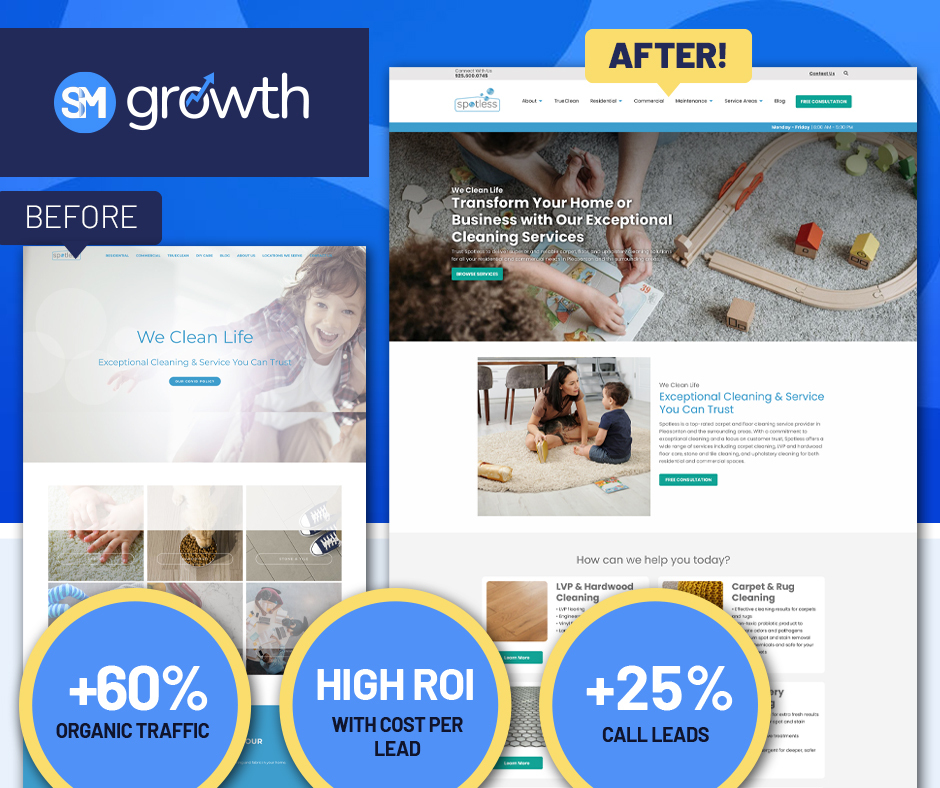
Spotless Sees 60% Increase in Organic Traffic After Launching ServiceMonster Growth Website
.svg)


.svg)
.svg)
.svg)
.svg)